
3D PROTOTYPING
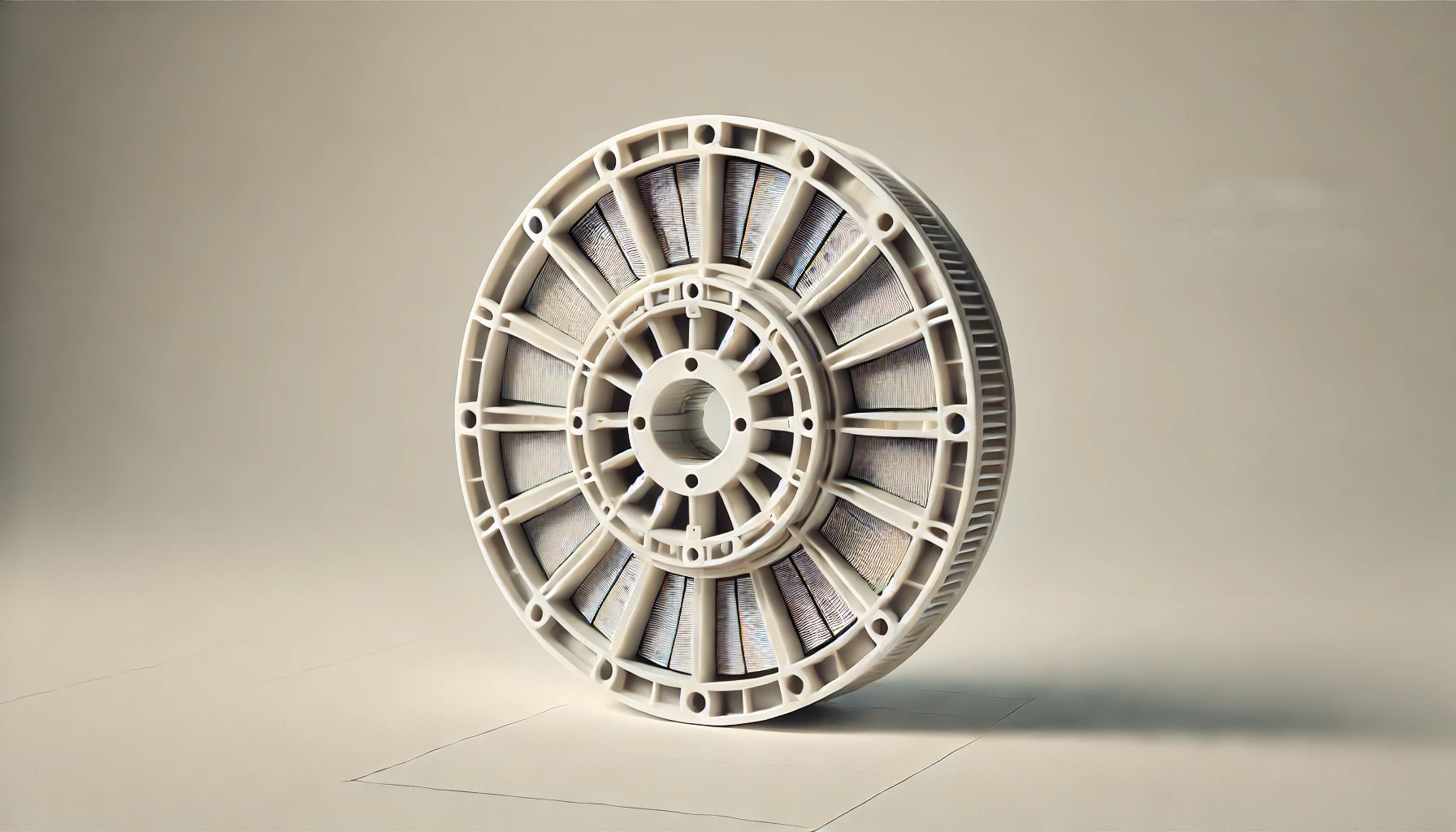
Bring your ideas to life with our cutting-edge 3D prototyping services. Whether you are developing a new product, refining a design, or exploring creative concepts, our team delivers high-quality prototypes with precision and speed.
Using advanced 3D printing and modeling technologies, we can create realistic and functional prototypes in a variety of materials to match your requirements.
From concept visualization to product testing, our 3D prototyping solutions streamline your development process, reduce costs, and accelerate time to market. Let us help you turn your vision into a tangible reality!
Professional 3D Printing with Bambu Lab X1E
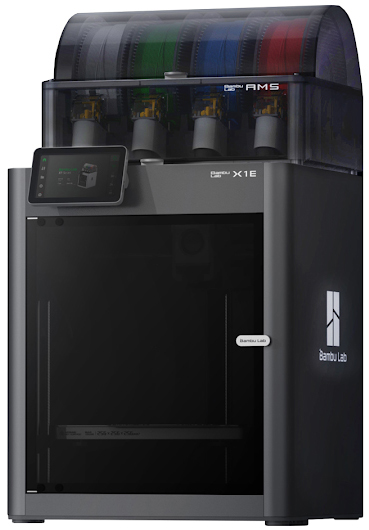
At Sahlbom Oy we use Bambu Lab X1E Combo professional 3D printers to produce high-quality prototypes, functional components, and mechanical parts. The X1E platform is designed for engineering and professional environments where reliability, material compatibility, and print quality are critical.
The printers feature a fully enclosed build chamber, high-speed CoreXY motion system, and automatic calibration systems that ensure consistent results even with complex geometries. Combined with Bambu Lab’s AMS (Automatic Material System), we can print with multiple materials or colors within a single print job, enabling more advanced prototyping and design validation.
Our printers support a wide range of engineering materials including PLA, PETG, ABS, ASA, TPU and fiber-reinforced filaments, allowing us to create both visual prototypes and durable functional parts suitable for real-world testing.
For security and operational reliability, our X1E printers operate on a local air-gapped network without cloud connectivity. This ensures that all design files, prototypes, and development data remain within our controlled environment.
Using this platform, we are able to rapidly iterate mechanical designs, validate concepts, and produce small batches of components directly in-house.
Technical Specifications – Bambu Lab X1E Combo
Build Volume
256 × 256 × 256 mm
Printing Technology
FDM / FFF (Fused Deposition Modeling)
Nozzle Temperature
Up to 320 °C
Heated Build Plate
Up to 110 °C
Enclosed Heated Chamber
Actively heated chamber designed for stable printing of engineering materials such as ABS and ASA.
Layer Resolution
Typical layer height range: 0.08 – 0.28 mm
Positioning Accuracy
High-precision CoreXY motion system with automatic calibration and vibration compensation.
Supported Materials
- PLA
- PETG
- ABS
- ASA
- TPU
- PA (Nylon)
- Carbon-fiber and glass-fiber reinforced filaments
Multi-Material Capability
AMS (Automatic Material System) enables multi-color and multi-material printing within a single job.
Build Plate Surface
Textured PEI plate for reliable adhesion and easy part removal.
Connectivity
LAN-only operation within an isolated network environment. No cloud connectivity is required for printer operation.
Typical Applications
- Mechanical prototypes
- Functional engineering parts
- Enclosures and fixtures
- Product development iterations
- Small batch component production
Parametric Design with FreeCAD
For our in-house mechanical design and prototyping work we use FreeCAD, a professional-grade parametric 3D modeling system. FreeCAD allows us to design parts and assemblies using fully parametric workflows, where dimensions, constraints, and relationships between features remain editable throughout the entire design process.
Parametric modeling is particularly valuable in product development and prototyping. Instead of redrawing parts from scratch when a dimension changes, we can simply adjust parameters and regenerate the model. This enables rapid iteration, precise engineering adjustments, and efficient collaboration between mechanical design and manufacturing.
Choosing FreeCAD does not limit our capabilities compared to traditional proprietary CAD platforms. The underlying modeling workflow—constraint-based sketches, parametric features, assemblies, and technical drawings—follows the same engineering principles used in well-known commercial CAD systems. Designs created with FreeCAD can be exported in standard formats such as STEP, STL, and other industry-compatible formats, ensuring interoperability with manufacturing tools, simulation environments, and other engineering software.
Another advantage is transparency and control over the development environment. Because FreeCAD is open-source software, it can be used without licensing restrictions, cloud dependencies, or vendor lock-in. This allows us to maintain a stable and reproducible design environment that integrates naturally with our internal development infrastructure.
In practice, the quality of engineering work is determined by the design process and the expertise of the engineers—not by the branding of the CAD software. FreeCAD provides the tools required for professional parametric modeling while remaining flexible, transparent, and well suited for modern engineering workflows.